
History, Geography and Where the Future is Built


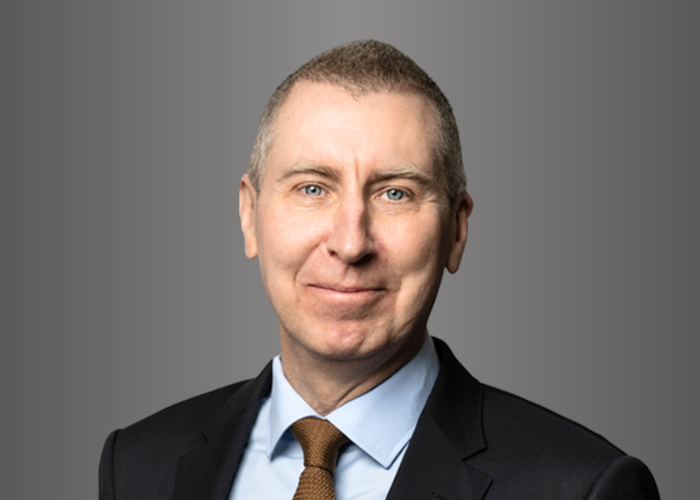
Håkansson’s opening message was direct enough to unsettle allocators sitting comfortably in US-heavy portfolios. If you want exposure to genuinely new technology, he argued, “you have to be in Asia and most of the time you have to be in China”. Wind, solar, batteries, semiconductors, and the machinery of the digital economy share the same reality: supply chains, manufacturing scale, and iteration speed are concentrated in the East. The implication wasn’t that the West is irrelevant, but that treating innovation as geographically neutral is an expensive illusion.
East Capital occupies a distinctive vantage point from which to judge that inflexion. The firm has been investing since 1997, long before emerging markets became a glossy asset class and long before US exceptionalism hardened into orthodoxy. Today the business manages around €4 billion across emerging equities, Eastern European real estate, and developed market equities and bonds, with 18 funds and an 80-strong team spanning Stockholm, Luxembourg, and research hubs in Hong Kong, Mumbai, and Dubai.
Yet one of the most revealing parts of Håkansson’s story is how he became wired for these markets in the first place.
His first trip to the emerging markets was Russia in 1985, when he was 23, not to hunt cheap P/E ratios, but to attend a wedding. That experience sits alongside a deeper family thread. His grandfather, a Swede from Skåne, left home a century ago to fight in Estonia’s war of independence, surviving a moment when manning a gun on an armoured gun train, his binoculars took a bullet. Yet, Estonia didn’t “exist” on the classroom maps of Håkansson’s childhood, so “of course, you want to understand how come someone wants to go there and risk their life, which meant I read a lot of history” and once “you start reading Eastern European history, you can’t stop”.
Håkansson’s conviction in founding East Capital stemmed from recognising that the Iron Curtain was not a normal state of Europe, and that the fall of the Berlin Wall presented an “opportunity of a lifetime.” It was his love of history that saw Håkansson travel through Eastern Europe in the early 1990s to see it before it changed, watching privatisation begin and sensing that ownership, governance and institutions would ultimately shape returns.
That focus on ownership became both a lesson and a survival mechanism. Håkansson returned repeatedly to a simple principle: you must know who the shareholders are. Governance isn’t a box-ticking exercise; it determines whether minority shareholders participate in value creation at all.
Pressed on how this philosophy becomes practical rather than aspirational, Håkansson’s answer was refreshingly old-school: go and see the companies. Site visits still matter because they reveal what numbers can’t: atmosphere, organisation and how people interact. He offered a grimly amusing early-days Russia heuristic: in the barter-trade era, annual reports were meaningless. The reliable signal was heating. “If it was cold, it was a sell; if it was warm, it was a buy.”
On portfolio construction, Håkansson was clear: “we are stock pickers and we want to find companies that show growth.” Country deviations in the global flagship emerging market fund are modest; differentiation comes from single-name conviction. They screen, meet with management, conduct their own research, and identify where their expectations differ from consensus. “We have to find to find something which is different to make sure we create some alpha.”
On China and Asia, Håkansson sees a shift in sentiment over the past year. Some investors won’t touch China at all, but many had merely hesitated and are now revisiting as valuation and performance force a second look. His argument is pragmatic: technology is embedded in everything, and while the West celebrates Nvidia, the chips are manufactured elsewhere – it is Taiwan’s TSMC, which has a far lower valuation.
Frontier markets add a layer of complexity: thinner capital markets, weaker governance and capital controls. For East Capital, that difficulty can be the opportunity. Currency, especially in places like Nigeria, becomes decisive, “so the only way to actually handle it is [to] position yourself depending on the currency in either exporters or domestic exposure.”
Håkansson is more constructive on Eastern Europe. Wars end, he said - not always well, but they end - and rebuilding follows. Ukraine’s reconstruction will span real estate, factories and infrastructure, but he also highlighted near shoring. Ukraine’s educated workforce makes it a logical next step for manufacturing that previously migrated from Germany into Poland, Slovakia and Hungary.
Asked which markets might graduate out of emerging status, Håkansson nominated South Korea and Taiwan in Asia, and Poland and the Czech Republic in Europe. On the flip side, he noted how unstable index classifications can be. Saudi Arabia jumped straight into emerging markets, while a Vietnam upgrade to emerging market could disrupt frontier indices.
Håkansson’s view of his job was clear: “You’re paid to be curious… to ask questions… you meet the most fascinating people in the world… it is a dream job.”
The golden thread running through the interview was unmistakable. Emerging and frontier markets are places where governance, ownership, currency and geopolitics collide; they are where valuation matters precisely because narratives overshoot. The West may still dominate indices and confidence, but Håkansson’s challenge lingered in the air: action, manufacturing, and, increasingly, technology itself are happening in these markets. If that valuation elastic band is stretched, reallocation doesn’t require heroics - only the willingness to look where the future is being built.
Click to listen to the full interview
East Capital
East Capital is an active asset manager specialising in emerging and frontier markets. Our investment teams base their investment strategy on in-depth knowledge of local markets, fundamental analysis and frequent company visits. Evaluation of ESG-related risks and opportunities forms an integral part of the investment process. We favour investments in companies that show long-term sustainable growth and have responsible owners.
East Capital is part of East Capital Group, a global asset manager based in Sweden since 1997 offering investment solutions within equities, fixed income securities and real estate. East Capital Group serves a wide range of international investors including leading institutions, companies and private individuals.
To subscribe to The Alternative Investor for free click here!
All content on the Money Maze Podcast is for your general information and use only and is not intended to address your particular requirements. In particular, the content does not constitute any form of advice, recommendation, representation, endorsement or arrangement and is not intended to be relied upon by users in making (or refraining from making) any specific investment or other decisions. We try to provide content that is true and accurate as of the date of publishing; however, we give no assurance or warranty regarding the accuracy, timeliness, or applicability of any of the contents. Please note, Money Maze Curated Podcasts are funded by the interviewee or their featured organization, unlike the Money Maze Podcast, which is funded by third party advertising. See link for further information.


Sign up below to download the interview transcript
Emerging Markets, once the darling of the asset allocators world, have found themselves increasingly discarded by those same allocators.
.png)
.avif)


.avif)

.png)
.avif)

Never miss an episode
Be the first to listen to new episodes and receive a breakdown of the key points discussed.